
Your HR systems, finally in sync.
Every hire, transfer, and termination in Workday lands in your local payroll — before cutoff, every time. OmniSync HR connects your global HRIS to Philippine and APAC systems, fully managed and backed by an SLA.
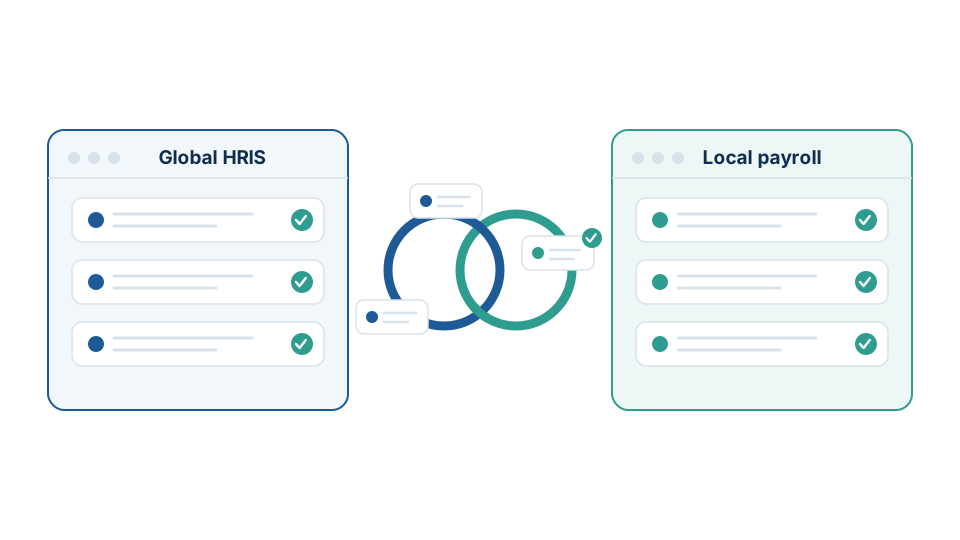
Runs between the systems you already run.
Supported today: Workday ↔ Sprout Workday ↔ BambooHR
On the roadmap: SAP SuccessFactors · Darwinbox
Running something we haven't listed? New connectors are built as part of your engagement.
See all integrations →
Numbers we put in writing
It's 9 p.m., two days before cutoff. You're comparing a Workday termination report to a Sprout export, row by row, because last cycle someone who resigned in March was paid in April — and finance is still chasing it. Nobody assigned you this job. It's just what happens when two systems of record disagree and a spreadsheet is the referee. Somewhere along the way, you became the integration.
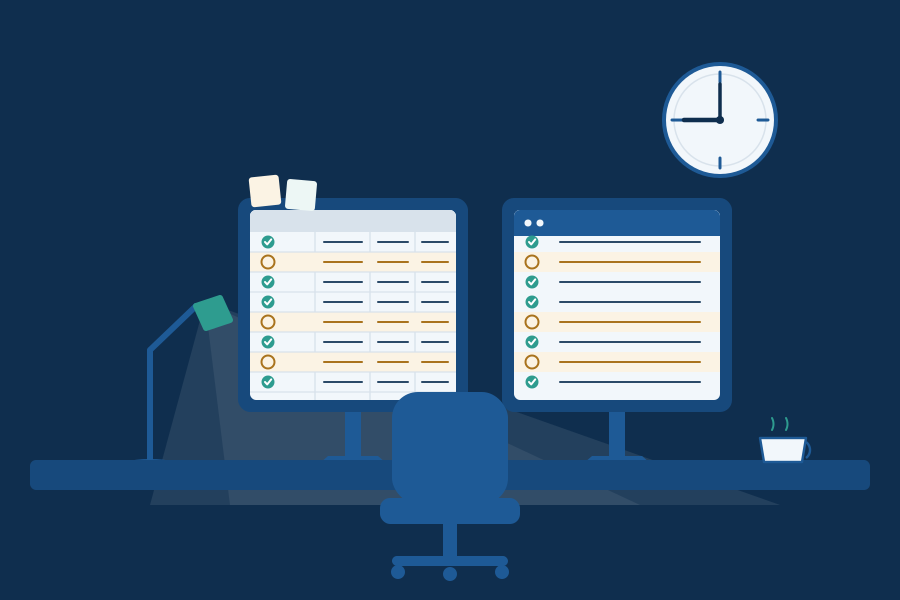
- Your system of record is global. Your payroll is local. In between: spreadsheets, re-keying, and hope.
- One missed termination = an overpayment you'll chase for months. One missed hire = an employee who doesn't get paid.
- Your Workday SI built the rollout and left. Nobody owns the sync.
Connected, not re-keyed.
Employee master data, org structures, time & leave, and payroll results flow automatically on your schedule — hourly to daily.
Watched, so you don't have to.
Every sync is monitored. Failures alert us first, get re-run the same day, and show up in your dashboard in plain English — never in a payroll error.
Delivered, not handed off.
We scope, build, run, and maintain the integration end to end. Live in 4–6 weeks. Your IT effort is measured in hours, not weeks.
Every sync, visible
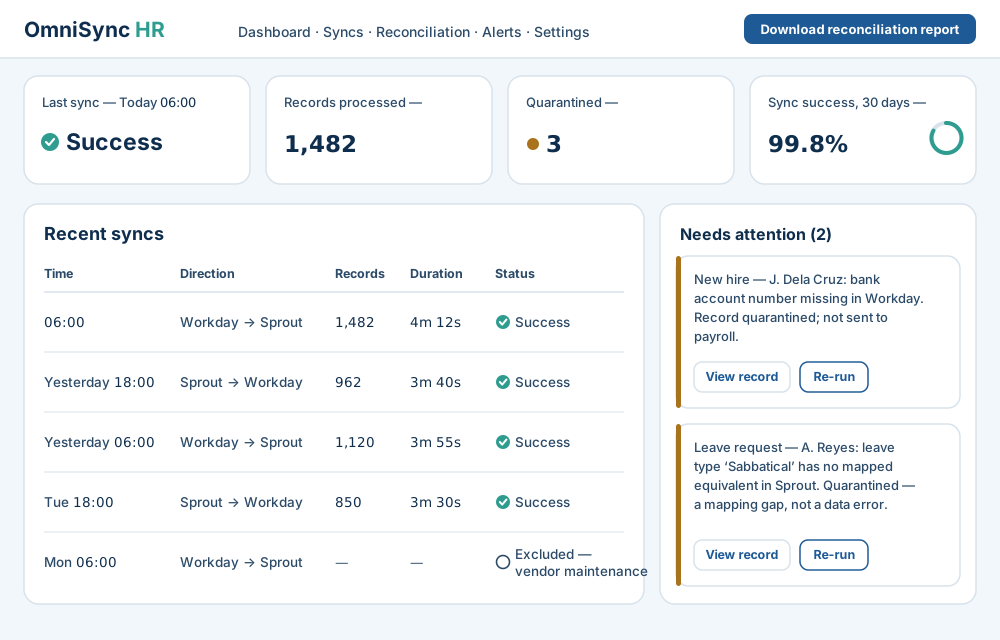
Last run status, records processed, and every exception explained in plain English — quarantined with a reason a payroll officer can act on, never silently dropped. Reconciliation reports download in one click for payroll cutoff sign-off. Email and Slack alerts mean a failure finds us — and you — before it finds a payslip.
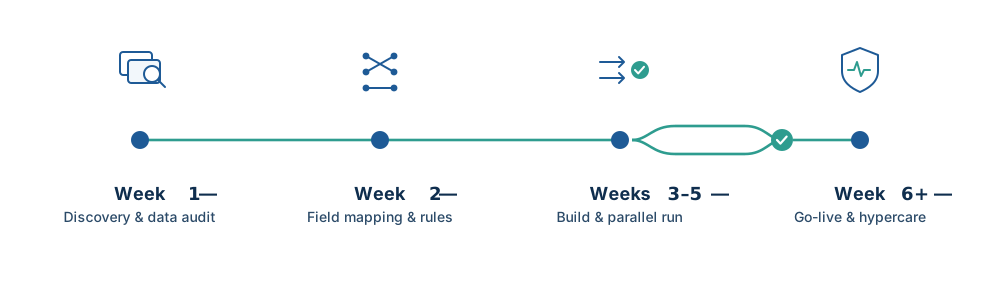
From scoping call to first synced payroll in 4–6 weeks.
- WK 1
Discovery & data audit — week 1.
We inventory both systems and audit data quality. You create a scoped service account and join the one mapping workshop.
- WK 2
Field mapping & rules — week 2.
Every field and transformation documented and signed off. The document is yours.
- WKS 3–5
Build & parallel run — weeks 3–5.
The integration runs alongside a real payroll cycle. You compare the outputs, line by line. Nothing writes to production until they match.
- WK 6+
Go-live & hypercare — week 6+.
Cutover, then 30 days of heightened monitoring. Then business as usual: scheduled syncs, dashboard, SLA.
Built for the people who own payroll — and the people who own the systems.
For HR operations
No re-keying between cutoffs. A reconciliation report to sign off before every run. Alerts in your inbox or Slack before a discrepancy reaches a payslip.
For IT and HRIS teams
Nothing to build, host, or babysit. The whole ask: a scoped service account (e.g., a Workday ISU), one mapping workshop, and a UAT contact — hours, not weeks. No middleware to license, no code to own, no new on-call rota. Field mappings are documented, versioned, and yours to keep.
Proof you can hold us to.
An SLA with a price on it. 99.5% of scheduled syncs succeed, measured monthly, visible in your dashboard — and any failed sync is re-run the same business day. Miss the number and service credits apply: 10%, 25%, or 50% of that month's fee. In the contract, not the brochure.
Nothing goes live until it matches. Every implementation runs in parallel against a real payroll cycle. You compare the outputs before cutover. If it doesn't match, it doesn't ship.
No lock-in by design. Your data stays in your systems — we move it. Field-mapping documentation is yours, and offboarding is a clean handover.
Encrypted in transit & at rest · PH Data Privacy Act compliant · GDPR-ready DPA · SOC 2 Type II in progress
Read the SLA → · Security & compliance
The price is on the page. On purpose.
Integration work usually hides its price behind a discovery call. Ours is published:
Standard from $10,000 setup + $2,249/month per integration pair. Premium from $15,000 + $3,749/month.
Pay the year up front and save 20%. Every tier includes full implementation, the dashboard, and the 99.5% SLA with service credits — so you can budget before you ever talk to us.
You have other ways to solve this. Here's the honest comparison.
Keep re-keying. Works every month until the month it doesn't — and one missed termination is an overpayment you'll chase for longer than it took to make.
Buy an iPaaS. Workato and Boomi are excellent toolkits — that you still have to build on, test, monitor, and staff. OmniSync HR is the outcome, not the toolkit.
Ask your Workday partner. SIs are built to implement and roll off. Payroll cutoff comes every month, forever — we run what we build, with service credits behind the SLA.
Payroll cutoff shouldn't be a fire drill.
What a scoping call actually is
30 minutes with an integration engineer — not a sales deck. We map which systems you run, which data needs to move, and where the re-keying happens today. You get a fixed quote within a week, whether or not you buy. If we're not the right fit for your stack, we'll say so on the call.